Tag: atheism

  • Real Questions from Real Friends

    Real Questions from Real Friends

    In the spirit of reigniting this blog, I’ve asked two of my closest friends, who are skeptical of Christianity, to provide me a list. A list of questions and concerns that trouble them the most about Christianity. Christianity is a worldview that makes serious claims about reality that should be seriously faced.

    We all experience reality. As we live life, we’ll be introduced to competing worldviews that attempt to explain reality. But, regardless of how hard we may try to avoid forming a worldview, we inevitably settle upon a worldview that we feel best describes the world around us.

    My friends providing genuine, sincere, and thoughtful objections are doing so in good faith. They’re doing so while being open enough to the answers. This approach may sound foreign for some people in an age of ideological rigidity. However, an honest search of truth can’t begin if the heart and mind aren’t willing to receive answers. Not just any answers, however. The answers that provide our hearts and minds with a deeper insight into reality. These are the answers Christ uses to transform lives.

    I hope my friends who supplied me with questions read these posts and see that my intentions are pure. I want them to pursue greater knowledge of Christ, seek His plan for their life, and ultimately devote their lives to Christ. When they read this, that may sound silly to them, but it’s not silly to those who’ve found Christ. Those of us who’ve been Christians for a long time know that Christ is a living God capable of life transformations.

    In this age of skepticism, people sometimes need to be assured they’re not checking their brains at the door when considering Christian theism as a worldview. For skeptics who search, with all their heart, soul, mind, and strength, they’ll find a savior in Christ.

    Be on the lookout for my upcoming articles addressing these questions from my dear friends…

  • Real Questions from Real Friends

    Real Questions from Real Friends

    In the spirit of reigniting this blog, I’ve asked two of my closest friends, who are skeptical of Christianity, to provide me a list. A list of questions and concerns that trouble them the most about Christianity. Christianity is a worldview that makes serious claims about reality that should be seriously faced.

    We all experience reality. As we live life, we’ll be introduced to competing worldviews that attempt to explain reality. But, regardless of how hard we may try to avoid forming a worldview, we inevitably settle upon a worldview that we feel best describes the world around us.

    My friends providing genuine, sincere, and thoughtful objections are doing so in good faith. They’re doing so while being open enough to the answers. This approach may sound foreign for some people in an age of ideological rigidity. However, an honest search of truth can’t begin if the heart and mind aren’t willing to receive answers. Not just any answers, however. The answers that provide our hearts and minds with a deeper insight into reality. These are the answers Christ uses to transform lives.

    I hope my friends who supplied me with questions read these posts and see that my intentions are pure. I want them to pursue greater knowledge of Christ, seek His plan for their life, and ultimately devote their lives to Christ. When they read this, that may sound silly to them, but it’s not silly to those who’ve found Christ. Those of us who’ve been Christians for a long time know that Christ is a living God capable of life transformations.

    In this age of skepticism, people sometimes need to be assured they’re not checking their brains at the door when considering Christian theism as a worldview. For skeptics who search, with all their heart, soul, mind, and strength, they’ll find a savior in Christ.

    Be on the lookout for my upcoming articles addressing these questions from my dear friends…

  • The Doublespeak of Secular Tolerance

    The Doublespeak of Secular Tolerance

    I’m motivated to write on this topic after the crap-storm of a controversy was created by the Religious Freedom Restoration Act (RFRA) that was recently signed into law in Indiana. Now that the static has begun to die down from that fiasco, I feel that there are some important observations that can be drawn from it. These observations aren’t necessarily new to the observant viewer, but they nevertheless reinforced the conclusions that I and many others have drawn. Those who vehemently oppose the supporters of RFRA laws claim to do so because they’re “tolerant” (doublespeak intended) and seek to rectify all injustices against the homosexual community perpetrated by Christians.

    I want to present a disclaimer before moving forward with this article. I’m not a legislator, attorney, law professor, or an authority on any legal matter. I’m not writing this article with the intention on sounding authoritative in my analysis of the RFRA law of Indiana or any of the twenty states that have RFRA laws. While I’ve carefully read Indiana’s RFRA law and the Federal RFRA signed into law in 1993 by President Bill Clinton, I’m not an expert in legal matters. I write this merely as an interested layman. My academic background is in business and Christian theology, which is a far cry from legal matters of this magnitude that necessarily require a vast breadth of legal knowledge to thoroughly and credibly critique the Constitutionality of this RFRA.

    With that being said, doesn’t the wording of this type of law sound peculiar? Religious Freedom Restoration Act. The title presupposes that religious freedom is in need of restoring. Why would it need restoring? I thought we had a little thing called a Constitution, and if I’m not mistaken, the First Amendment addresses this issue unambiguously. It says, “Congress shall make no law respecting an establishment of religion, or prohibiting the free exercise thereof...” It seems odd why any RFRA would need to be written, given the First Amendment of the United States’ Constitution is still in force.

    Regardless, I remain supportive of all efforts to reinforce and protect religious liberty. My preference would be to uncompromisingly cling to the First Amendment rather than draft other legislation that could potentially compromise what the First Amendment was intended for. In Judge Andrew Napolitano’s assessment of the legal efficacy of the new RFRA law in Indiana, “If it was just trying to boast that it was defending the same religious liberties the Constitution already requires it to defend, its efforts were clumsy, unnecessary and wasteful.” In principle, I support the RFRA bill but I sympathize with the fact that maybe the RFRA bill wasn’t legislatively executed properly. However, my critiques of the bill are legislative in nature rather than directed towards the principle of the bill itself, which is where we begin to see the how “tolerant” some people really are in their natural and unfiltered reaction to it.

    I’ve listed three (of countless) cultural exhibits in the media below that specifically relate to homosexuality and their “tolerance” of those who don’t celebrate and affirm homosexuality. I’ve noted two videos as having explicit language so that if you are sensitive to vulgar language, you may refrain from viewing the video.

    Exhibit A – MSNBC host Ed Shultz

    After viewing the video, do you feel like the well reasoned, intelligently spoken Ryan Anderson was treated with tolerance? Um, no. If Ed Shultz absolutely disagreed with Anderson’s position, which he clearly did, wouldn’t a tolerant open-minded host gladly permit his guest to explain their position and allow for a fruitful dialogue rather than “cut his mic” when he couldn’t tolerate his guest any longer? As you’ll see with all of these exhibits, they all have a irresponsible habit of creating a flimsy straw man (i.e. an informal fallacy based on a false representation of an opponent’s argument). Shultz was visibly angered by Anderson’s opinion and even went so far as to say that discrimination is “the position of the right wing”. If I were the CEO of MSNBC, I would be furious by Shultz’s behavior (even if I agreed with him) because of his deliberate actions to tyrannically silence his opposition and to intentionally misrepresent the “right wing.

    Exhibit B – Dan Savage (Language Warning)

    https://www.youtube.com/watch?v=ao0k9qDsOvs

    This video of gay activist Dan Savage is vile and embarrassingly ignorant. Sadly, Savage appears to be in an environment where he’s speaking to young high school age students. Savage begun is unintelligible rant by noting that everyone should ignore what the Bible says about gays just like we ignore what the Bible says about “shellfish, slavery, dinner, farming, menstruation, virginity, masturbation”. He also continues on to describe how the Bible is a “radically pro-slavery document” and said that Civil War time slave owners waved bibles over the heads of their slaves because the Bible condones slavery. As Savage was grossly misrepresenting the Bible, those with Christian convictions chose to walk out during his misguided tirade. With as much class as he started with, Savage went on to call them “pansy asses.”

    For someone who prides himself on combating intolerance, ignorance, and bigotry, he seems to be the epitome of it. The ironic thing about the video was that he’s accusing the Bible of being wrong while being absolutely wrong about the Bible. Even if his interpretation of the Bible were correct, which is isn’t, his atheistic worldview wouldn’t permit him to make any objective moral denouncements of any action as he did in this video (read here for an article I’ve written on this topic).

    Below is an explicit example of his “tolerance” towards those on the Right. For those who wish not to view it because of the explicit language, he plainly says, “I wish they were all fu*&^%$ dead” when talking about the conservative politicians who disagree with his positions. Now imagine a conservative politician or activist making the same type of vile statement directed at homosexuals. The media backlash would be endless. However, when Dan Savage proudly makes these types of remarks about people of a conservative nature, and they are easily dismissed under the rug. Is this an ambassador for tolerance? Clearly not.

    https://www.youtube.com/watch?v=5t5iWp9fDiU

    Exhibit C – Bill Maher (Language Warning)

    Bill Maher implements a very similar tactic as Savage. It’s an argument advanced by extreme ignorance. Maher ignorantly said, “He [Indiana Governor Mike Pence] and other like minded conservative want it both ways, they hate discrimination but they love the Bible, a book that commands you to discriminate.” Maher then goes on to say that the God tells Christians to “kill them [homosexuals].” Maher proceeds to take samplings the craziest of crazy Christians as honest examples of what the Bible commands Christians to do in regards to our treatment of homosexuals, many of these examples he puts forward illustrate how these Christians’ desire to stone gays and how they believe that God is punishing America for legally permitting homosexuality in this country. Maher’s conclusion? These are loyal Christians who are living out what the Bible literally tells us to do, which he compares (at least in principle) to Muslims loyally performing an Islamic act of jihad.

    Again, Maher is suffering just as badly from ignorance as Savage about how to properly understand the Old Testament laws. His ignorance is preventing him from seeing Christianity for what it truly is. Ignorance is preventing Maher from seeing that the radicals who identify themselves as Christian aren’t behaving according to what Christianity actually says while the jihadist Muslims are performing in perfect alignment to what the Quran says. Maher’s ignorance is influencing a vast widespread intolerance of Christians on the basis of faulty information. I agree with Maher, those examples he laid out in his video are dispecable, but they are “radical” and “on the fringe” despite what his faulty understanding of Christianity may have him believe.

    Old Testament Laws

    The last two exhibits were largely centered on a sad misunderstanding of the Old Testament laws and how they apply (or don’t apply) to us today. While much can be written on this (and has been extensively written), I’d like to recommend an excellent book titled Is God a Moral Monster? by Paul Copan which exhaustively deals with these types of objections to these laws that Bill Maher and Dan Savage cited in their videos. Also, the video below of Dr. Michael Brown beautifully summarizes how the Old Testament laws are to be properly viewed now in less than two minutes…

    Conclusion

    While I don’t commonly jump into the realm of politics in my apologetic writings, I felt like this issue needs desperately addressed. I only selected three individuals who have consistently made an influential imprint on the culture within their own sphere of influence. Sadly, the culture seems to have adopted their approach. Their approach is grossly intolerant towards those of conservative Christian values. Having viewed the work of all three of these men for years, I can say with confidence that they are not capable of have a civil well reasoned discussion to any meaningful degree.

    I’d like to concede that I am quite familiar of how narrow-minded some Christians can be. They can be just as bull headed and pompous in their approach as these men are. However, the social climate has shown that Christians are now the ones being deliberately isolated as bigoted, narrow-minded, and intolerant for no other reason than being a loyal follower of Christ. Since many secularists misunderstand the essence of  being a Christ follower, it’s inherently difficult for them to give a credible and honest critique of our worldview. That is why they often resort to advancing misrepresentations and delivering malicious ad hominem attacks.

    Am I saying that gays haven’t been mistreated by people who self-identify as being Christian? Absolutely not. However, we’re now in a culture where Christians are being largely condemned for being Christians more so than homosexuals are being condemned for being homosexual. This is a very politically incorrect thing to say, but it’s absolutely true and I don’t care what the PC police think about my assessment of the political and religious atmosphere. Not because I don’t care about them as individuals, but because I feel their agenda is a corrupt one. As Christians, it’s shouldn’t be a surprise that nonbelievers venomously oppose us to the point where hate is unambiguously aimed at us. In their eyes, any sign of traditional Christian values must be extinguished because it symbolizes a worldview that aims to improve upon every individual life. What is so wrong with that? The problem is that so many people who live in contradiction to the will of God end up trying to combat it by demonizing it in public. This is what we are seeing in American culture.

    Tolerance, as I hope to experience one day, should be a two-way street. Political posturing in the liberal media would be happy to mislead you into believing that Bible-believing Christians would joyously stone every homosexual in existence. This is patently absurd. Straw man fallacies are overwhelmingly abundant in the modern news outlets, so much so that watching the news makes you vulnerable to being an innocent victim of secular propaganda. Tolerance has largely been redefined to mean, “I’m tolerant of everyone who agrees with me.” Political commentators and activists who unashamedly insult Christians without remorse are guilty of being as narrow-minded, ignorant, hateful, and bigoted as they are claiming Christians are. Our goal as Christians is to remain Christ-like in our approach and not succumb to their tactics. Falling into such a trap would do a huge disservice to our cause. We can rest assured that we have the truth and realize that through the Holy Spirit, God will do amazing things if we are obedient in everything He asks us to us through His Word.

  • The Doublespeak of Secular Tolerance

    The Doublespeak of Secular Tolerance

    I’m motivated to write on this topic after the crap-storm of a controversy was created by the Religious Freedom Restoration Act (RFRA) that was recently signed into law in Indiana. Now that the static has begun to die down from that fiasco, I feel that there are some important observations that can be drawn from it. These observations aren’t necessarily new to the observant viewer, but they nevertheless reinforced the conclusions that I and many others have drawn. Those who vehemently oppose the supporters of RFRA laws claim to do so because they’re “tolerant” (doublespeak intended) and seek to rectify all injustices against the homosexual community perpetrated by Christians.

    I want to present a disclaimer before moving forward with this article. I’m not a legislator, attorney, law professor, or an authority on any legal matter. I’m not writing this article with the intention on sounding authoritative in my analysis of the RFRA law of Indiana or any of the twenty states that have RFRA laws. While I’ve carefully read Indiana’s RFRA law and the Federal RFRA signed into law in 1993 by President Bill Clinton, I’m not an expert in legal matters. I write this merely as an interested layman. My academic background is in business and Christian theology, which is a far cry from legal matters of this magnitude that necessarily require a vast breadth of legal knowledge to thoroughly and credibly critique the Constitutionality of this RFRA.

    With that being said, doesn’t the wording of this type of law sound peculiar? Religious Freedom Restoration Act. The title presupposes that religious freedom is in need of restoring. Why would it need restoring? I thought we had a little thing called a Constitution, and if I’m not mistaken, the First Amendment addresses this issue unambiguously. It says, “Congress shall make no law respecting an establishment of religion, or prohibiting the free exercise thereof...” It seems odd why any RFRA would need to be written, given the First Amendment of the United States’ Constitution is still in force.

    Regardless, I remain supportive of all efforts to reinforce and protect religious liberty. My preference would be to uncompromisingly cling to the First Amendment rather than draft other legislation that could potentially compromise what the First Amendment was intended for. In Judge Andrew Napolitano’s assessment of the legal efficacy of the new RFRA law in Indiana, “If it was just trying to boast that it was defending the same religious liberties the Constitution already requires it to defend, its efforts were clumsy, unnecessary and wasteful.” In principle, I support the RFRA bill but I sympathize with the fact that maybe the RFRA bill wasn’t legislatively executed properly. However, my critiques of the bill are legislative in nature rather than directed towards the principle of the bill itself, which is where we begin to see the how “tolerant” some people really are in their natural and unfiltered reaction to it.

    I’ve listed three (of countless) cultural exhibits in the media below that specifically relate to homosexuality and their “tolerance” of those who don’t celebrate and affirm homosexuality. I’ve noted two videos as having explicit language so that if you are sensitive to vulgar language, you may refrain from viewing the video.

    Exhibit A – MSNBC host Ed Shultz

    After viewing the video, do you feel like the well reasoned, intelligently spoken Ryan Anderson was treated with tolerance? Um, no. If Ed Shultz absolutely disagreed with Anderson’s position, which he clearly did, wouldn’t a tolerant open-minded host gladly permit his guest to explain their position and allow for a fruitful dialogue rather than “cut his mic” when he couldn’t tolerate his guest any longer? As you’ll see with all of these exhibits, they all have a irresponsible habit of creating a flimsy straw man (i.e. an informal fallacy based on a false representation of an opponent’s argument). Shultz was visibly angered by Anderson’s opinion and even went so far as to say that discrimination is “the position of the right wing”. If I were the CEO of MSNBC, I would be furious by Shultz’s behavior (even if I agreed with him) because of his deliberate actions to tyrannically silence his opposition and to intentionally misrepresent the “right wing.

    Exhibit B – Dan Savage (Language Warning)

    https://www.youtube.com/watch?v=ao0k9qDsOvs

    This video of gay activist Dan Savage is vile and embarrassingly ignorant. Sadly, Savage appears to be in an environment where he’s speaking to young high school age students. Savage begun is unintelligible rant by noting that everyone should ignore what the Bible says about gays just like we ignore what the Bible says about “shellfish, slavery, dinner, farming, menstruation, virginity, masturbation”. He also continues on to describe how the Bible is a “radically pro-slavery document” and said that Civil War time slave owners waved bibles over the heads of their slaves because the Bible condones slavery. As Savage was grossly misrepresenting the Bible, those with Christian convictions chose to walk out during his misguided tirade. With as much class as he started with, Savage went on to call them “pansy asses.”

    For someone who prides himself on combating intolerance, ignorance, and bigotry, he seems to be the epitome of it. The ironic thing about the video was that he’s accusing the Bible of being wrong while being absolutely wrong about the Bible. Even if his interpretation of the Bible were correct, which is isn’t, his atheistic worldview wouldn’t permit him to make any objective moral denouncements of any action as he did in this video (read here for an article I’ve written on this topic).

    Below is an explicit example of his “tolerance” towards those on the Right. For those who wish not to view it because of the explicit language, he plainly says, “I wish they were all fu*&^%$ dead” when talking about the conservative politicians who disagree with his positions. Now imagine a conservative politician or activist making the same type of vile statement directed at homosexuals. The media backlash would be endless. However, when Dan Savage proudly makes these types of remarks about people of a conservative nature, and they are easily dismissed under the rug. Is this an ambassador for tolerance? Clearly not.

    https://www.youtube.com/watch?v=5t5iWp9fDiU

    Exhibit C – Bill Maher (Language Warning)

    Bill Maher implements a very similar tactic as Savage. It’s an argument advanced by extreme ignorance. Maher ignorantly said, “He [Indiana Governor Mike Pence] and other like minded conservative want it both ways, they hate discrimination but they love the Bible, a book that commands you to discriminate.” Maher then goes on to say that the God tells Christians to “kill them [homosexuals].” Maher proceeds to take samplings the craziest of crazy Christians as honest examples of what the Bible commands Christians to do in regards to our treatment of homosexuals, many of these examples he puts forward illustrate how these Christians’ desire to stone gays and how they believe that God is punishing America for legally permitting homosexuality in this country. Maher’s conclusion? These are loyal Christians who are living out what the Bible literally tells us to do, which he compares (at least in principle) to Muslims loyally performing an Islamic act of jihad.

    Again, Maher is suffering just as badly from ignorance as Savage about how to properly understand the Old Testament laws. His ignorance is preventing him from seeing Christianity for what it truly is. Ignorance is preventing Maher from seeing that the radicals who identify themselves as Christian aren’t behaving according to what Christianity actually says while the jihadist Muslims are performing in perfect alignment to what the Quran says. Maher’s ignorance is influencing a vast widespread intolerance of Christians on the basis of faulty information. I agree with Maher, those examples he laid out in his video are dispecable, but they are “radical” and “on the fringe” despite what his faulty understanding of Christianity may have him believe.

    Old Testament Laws

    The last two exhibits were largely centered on a sad misunderstanding of the Old Testament laws and how they apply (or don’t apply) to us today. While much can be written on this (and has been extensively written), I’d like to recommend an excellent book titled Is God a Moral Monster? by Paul Copan which exhaustively deals with these types of objections to these laws that Bill Maher and Dan Savage cited in their videos. Also, the video below of Dr. Michael Brown beautifully summarizes how the Old Testament laws are to be properly viewed now in less than two minutes…

    Conclusion

    While I don’t commonly jump into the realm of politics in my apologetic writings, I felt like this issue needs desperately addressed. I only selected three individuals who have consistently made an influential imprint on the culture within their own sphere of influence. Sadly, the culture seems to have adopted their approach. Their approach is grossly intolerant towards those of conservative Christian values. Having viewed the work of all three of these men for years, I can say with confidence that they are not capable of have a civil well reasoned discussion to any meaningful degree.

    I’d like to concede that I am quite familiar of how narrow-minded some Christians can be. They can be just as bull headed and pompous in their approach as these men are. However, the social climate has shown that Christians are now the ones being deliberately isolated as bigoted, narrow-minded, and intolerant for no other reason than being a loyal follower of Christ. Since many secularists misunderstand the essence of  being a Christ follower, it’s inherently difficult for them to give a credible and honest critique of our worldview. That is why they often resort to advancing misrepresentations and delivering malicious ad hominem attacks.

    Am I saying that gays haven’t been mistreated by people who self-identify as being Christian? Absolutely not. However, we’re now in a culture where Christians are being largely condemned for being Christians more so than homosexuals are being condemned for being homosexual. This is a very politically incorrect thing to say, but it’s absolutely true and I don’t care what the PC police think about my assessment of the political and religious atmosphere. Not because I don’t care about them as individuals, but because I feel their agenda is a corrupt one. As Christians, it’s shouldn’t be a surprise that nonbelievers venomously oppose us to the point where hate is unambiguously aimed at us. In their eyes, any sign of traditional Christian values must be extinguished because it symbolizes a worldview that aims to improve upon every individual life. What is so wrong with that? The problem is that so many people who live in contradiction to the will of God end up trying to combat it by demonizing it in public. This is what we are seeing in American culture.

    Tolerance, as I hope to experience one day, should be a two-way street. Political posturing in the liberal media would be happy to mislead you into believing that Bible-believing Christians would joyously stone every homosexual in existence. This is patently absurd. Straw man fallacies are overwhelmingly abundant in the modern news outlets, so much so that watching the news makes you vulnerable to being an innocent victim of secular propaganda. Tolerance has largely been redefined to mean, “I’m tolerant of everyone who agrees with me.” Political commentators and activists who unashamedly insult Christians without remorse are guilty of being as narrow-minded, ignorant, hateful, and bigoted as they are claiming Christians are. Our goal as Christians is to remain Christ-like in our approach and not succumb to their tactics. Falling into such a trap would do a huge disservice to our cause. We can rest assured that we have the truth and realize that through the Holy Spirit, God will do amazing things if we are obedient in everything He asks us to us through His Word.

  • Duck Commander’s Candor and the Moral Argument

    Duck Commander’s Candor and the Moral Argument

    Duck Commander Phil Robertson is in the public eye again. God truly knows I love him. I really do. I love Duck Dynasty. It’s hilarious. I admire the candor of Phil Robertson and his willingness to call things as he honestly sees them. Honestly, most of the time he’s right when it comes to the essence of his message. In this case, since he’s utilizing an apologetic argument in a public forum, I’d like to examine the argument and his delivery and see if he was doing the argument justice. Below is a transcript of what he said.

    “I’ll make a bet with you. Two guys break into an atheist’s home. He has a little atheist wife and two little atheist daughters. Two guys break into his home and tie him up in a chair and gag him. And then they take his two daughters in front of him and rape both of them and then shoot them and they take his wife and then decapitate her head off in front of him. And they can look at him and say, ‘Isn’t it great that I don’t have to worry about being judged? Isn’t it great that there’s nothing wrong with this? There’s no right or wrong, now is it dude?’

    Then you take a sharp knife and take his manhood and hold it in front of him and say, ‘Wouldn’t it be something if this [sic] was something wrong with this? But you’re the one who says there is no God, there’s no right, there’s no wrong, so we’re just having fun. We’re sick in the head, have a nice day.’

    If it happened to them, they probably would say, ‘Something about this just ain’t right.’”

    Well, that’s quite an example. An atheist family being brutally raped and murdered is very politically incorrect to imagine in a public setting. However, Phil has never been one for abiding by the rules of the tyrannical PC police. If Phil wants to say it, you better believe he’s going to say it! Some of the article titles published by public media outlets that have reported on Phil’s comments have been titled, “Duck Dynasty’s Phil Robertson Attacks Atheists at a Florida Event Using Rape”, “Duck Dynasty’s Phil Robertson condemns atheists at prayer event”, “Phil Robertson’s Appalling Atheist Fantasy”, “Duck Dynasty’s’ Phil Robertson Imagines Brutal Attack on Atheists in Graphic Speech.” Oh boy. I’m afraid many of the ‘journalists’ may be contextually challenged when evaluating Phil’s remarks in their entirety. Or they may be entirely focused on misleading their audience. That’s a possibility too.

    It seems that many in the media don’t like Phil. His appearance seemingly reeks of ignorance. That dirty disheveled hair, camouflage clothing, and a Bible in his back pocket, are immediate red flags for the modern day secularist. These red flags translate into a target on the back of Phil Robertson’s head. Everyone seems to be looking for Phil to slip up and say something controversial so they can nail him for it publically. For example, Phil commented on his opposition to sexual sin to GQ which caused quite the controversy with A & E and the public at large. In the end, A & E realized that Phil was worth the cultural liability and kept him on Duck Dynasty. Smart move A & E.

    However, regardless of Phil’s redneck appearance and his often unorthodox way of turning a phrase, was Phil’s message valid or was it fallacious? That’s what I’ll be examining.

    The Moral Argument

    Phil’s fictional scenario of two guys breaking into an atheists’ home and proceeding to do awful things to the atheist family was meant to illustrate that the atheist would consider what the criminals did was objectively wrong. As Phil said, the atheist would say, ‘Something about this just ain’t right.’ All people, atheists and theists alike, wouldn’t go through a tragedy that Phil described and feel like what happened was morally permissible. We would all acknowledge how morally bankrupt such actions would be, which was Phil’s point. He’s not saying that atheists can’t acknowledge objective morality despite what the secular media has been irresponsibly repeating. In fact, it’s quite the opposite. One of the primary points of the illustration is to acknowledge that atheists are capable of acknowledging objective morality. However, the main premise of his fictional tragedy is that the atheist doesn’t have the philosophical framework to make sense of how objective moral values and duties existence at all.

    The moral argument goes like this,

    • If God does not exist, objective moral values and duties do not exist
    • Objective moral values and duties do exist
    • Therefore, God exists

    Many prominent atheists have conceded as much. Below are a couple examples of such admissions,

    Richard Dawkins describes in River Out of Eden: A Darwinian View of Life,

    “In a universe of blind physical forces and genetic replication, some people are going to get hurt, other people are going to get lucky, and you won’t find any rhyme or reason in it, nor any justice. The universe we observe has precisely the properties we should expect if there is, at bottom, no design, no purpose, no evil and no good, nothing but blind, pitiless indifference. . . . DNA neither knows nor cares. DNA just is. And we dance to its music” (p. 133)

    Atheist William Provine, a scholar of the history of evolutionary biology at Cornell University, said in a debate with Philip Johnson,

    “Let me summarize my views on what modern evolutionary biology tells us loud and clear — and these are basically Darwin’s views. There are no gods, no purposes, and no goal-directed forces of any kind. There is no life after death. When I die, I am absolutely certain that I am going to be dead. That’s the end of me. There is no ultimate foundation for ethics, no ultimate meaning in life, and no free will for humans, either”

    Atheist philosopher Michael Ruse wrote in Evolutionary Theory and Christian Ethics,

    “The position of the modern evolutionist is that humans have an awareness of morality because such an awareness of biological worth. Morality is a biological adaptation no less than are hands and feet and teeth. Considered as a rationally justifiable set of claims about an objective something, ethics is illusory. I appreciate when someone says, ‘Love thy neighbor as thyself,’ they think they are referring above and beyond themselves. Nevertheless, such reference is truly without foundation. Morality is just an aid to survival and reproduction, . . . and any deeper meaning is illusory” (pp. 262-269)

    When looking at what Phil said in its proper philosophical context, he’s absolutely right. Under an atheistic worldview, a heinous criminal could say without being objectively morally wrong, ‘Isn’t it great that I don’t have to worry about being judged? Isn’t it great that there’s nothing wrong with this? There’s no right or wrong, now is it dude?’ The existence of objective morality is a tremendously convincing argument for God. One of the biggest advocates for this argument was C.S. Lewis, and the argument personally had a transformative affect on his conversion to Christianity from atheism. In the classic Mere Christianity, Lewis wrote,

    “My argument against God was that the universe seemed so cruel and unjust. But how had I got this idea of just and unjust? A man does not call a line crooked unless he has some idea of a straight line. What was I comparing this universe with when I called it unjust?”

    So many unbelievers fall into this pit of confusion about morality. They think the existence of injustice is positive proof of the nonexistence of God, but where do they get the notion of objective justice? Oddly enough, they couldn’t have an objective standard of morality without God, which defeats the purpose of their complaint that God is unjust. As Christian apologist Frank Turek rightfully says, “atheists have to steal from God to fight against Him.”

    Phil’s Candor

    Many people are turned off by it. Some are turned on by it. Personally, I recognize Phil’s rough personality and don’t look too deep into his seemingly abrasive message to draw hasty conclusions that may not be right. Many perceive his delivery as a little too abrasive and harsh, and I would sympathize with some of those people on some of the comments (including this one) that Phil has made in the past. However, Phil has made it excessively clear in all forums that he loves God and he loves his neighbor. While some people may take Phil’s words out of context to support a political agenda against him, I would challenge anyone to advance an honest case against Phil Robertson that accurately illustrates that Phil is a hateful, narrow-minded, intolerant, bigot.

    Does that mean that I would have approached the very same situation with the same gruffness as Phil? I personally take a softer approach. While I feel that Phil is generally knowledgeable about the topics he speaks on, I feel that his messages sometimes gets lost in transit because of the gruff delivery. His candor sometimes becomes a liability rather than an asset to his ministry. While I can see how it can serve as both, it would be wise for Phil to proceed forward with caution and clarity when using controversial illustrations that are highly susceptible to being twisted and warped to suit a negative PR campaign against him and his enterprise.

    Conclusion

    Phil is a good man, but he is undoubtedly gruff. He doesn’t pretend to be a soft touchy-feely preacher. If you want to hear the raw unfiltered truth, Phil is your guy. However, does his candor mute his message? Sometimes yes. Unbelievers are going to be upset at the way he delivered this example. Why? Because it specifically focused on an atheist family! The atheists were victims of the crime in his scenario which made atheists feel somewhat victimized. That’s what motivated the aggressive and misleading article titles about this situation that I referenced earlier. Obviously, as I explained earlier, an honest examination of Phil’s remarks would invalidate the legitimacy of the misleading articles attempting to disparage Phil for using this illustration.

    In the end, we must be careful about what we say and how we say it. Maybe instead of using an “atheist family”, Phil could have just referenced a “family” and examined how impotent the atheistic worldview is in condemning the objective evil in this fictional tragedy. The family doesn’t necessarily have to be an “atheist family” in order to effectively make the point. In fact, there are many other ways to illustrate the very same point, likely to a greater and more fulfilled ends. We should strive to deliver truth without compromising compassion, and sometimes Phil can deliver a message that is lopsided towards truth without the components of compassion that are necessary when evangelizing to the lost. Regardless of his candid delivery, Phil is a brother in Christ and we should pray for the success of his ministry.

  • The Heavy Indictment Against God’s Righteousness

    The Heavy Indictment Against God’s Righteousness

    Many people have emotionally and intellectually wrestled with the evils and sufferings of this world. Everyone, Christian and atheist alike, genuinely wonder about the reasons for the existence of these evils and sufferings. When evil and suffering is as prevalent as it is, it is a natural curiosity for anyone of any background to contemplate these things. Worldviews (i.e. Christianity, Islam, Judaism, Buddhism, Hinduism, Atheism, etc…) approach the matter of earthly evil and suffering in different manners, some more effective than others. However, Christianity stakes a claim that no other religion does. God condescended himself into the form of man and experienced evil and suffering from a first hand human perspective while simultaneously remaining fully God. In the process of Jesus’ earthly ministry, God opened the door for everyone to experience eternity without evil in His divine presence through His everlasting sacrificial act of drying on the cross and resurrecting on the third day. All that is required is to accept Jesus Christ as Lord and Savior in order to inherit eternal life with Him through His grace.

    After watching the video of Stephen Fry, you’ll probably get a different impression of the Christian God than the one I very briefly described above. Fry and I approach this matter from two very different perspectives; I know Fry isn’t the only individual who feels this way about the Christian God. Among the unbelieving community, many are discontented by the very same perception of God. In their mind, the Christian God is a seemingly evil one. As Fry states during this video,

    “…the god who created this universe, if indeed it was created by God, is quite clearly a maniac. Utter maniac. Totally selfish. Totally. We have to spend our life on our knees, thanking him? What kind of god would do that? Yes, the world is splendid, but it also has in it insects, whose whole life cycle is to burrow into the eyes of children and make them blind. That eat outwards from the eyes. How — why? Why did you do that to us? You could easily have made a creation in which that didn’t exist. It is simply not acceptable…It’s perfectly apparent that he’s monstrous, utterly monstrous, and deserves no respect whatsoever. The moment you banish him, your life becomes simpler, purer, cleaner and more worth living in my opinion”

    Fry isn’t the only atheist who’s expressed his passionate discontent with the Christian God. Richard Dawkins famously wrote the following in his book, The God Delusion,

    “The God of the Old Testament is arguably the most unpleasant character in all fiction: jealous and proud of it; a petty, unjust, unforgiving control-freak; a vindictive, bloodthirsty ethnic cleanser; a misogynistic, homophobic, racist, infanticidal, genocidal, filicidal, pestilential, megalomaniacal, sadomasochistic, capriciously malevolent bully.”

    I could continue to list quotes from the New Atheists concerning their feelings on how seemingly evil Christian God but I’ll spare you the extra reading. The main point being made by these unbelievers is that the Christian God is evil (if He exists) because of the fallen condition of the world. Is there an adequately satisfying answer to this difficult concern? Does Fry point out anything in the video that would substantively add anything to this conversation? Is atheism a more satisfying approach to the problem of suffering and evil? Since Fry clearly considers Christian theism to be a worldview that miserably fails to account for the fallen condition of this world, it’s important to assess whether his own worldview accounts for this problem any better. If it doesn’t, would Fry be as outraged about atheism as he was at God during this video?

    Is God a Bad Guy?

    If I understand Fry correctly, God is an “utter maniac” because of the perceived injustices that are observed in the form of natural evil (i.e. tornados, hurricanes, disease, etc…) and moral evil (i.e. evil freely performed at the hand of moral agents), but is this a sound inference? Can it be firmly established that God is a bad guy because he permits certain evils to occur on Earth while undoubtedly having the power to stop them? Respectfully, I found Fry’s response to be grossly presumptuous and arrogant. I don’t make this comment as an ad hominem attack to Fry’s character because he’s very cleverly spoken (similar to Christopher Hitchens), but he has a grossly inflated sense of his own understanding of God. While Fry sincerely believes he was accurately presenting the qualities of the Christian God, his critique couldn’t have been a more misrepresentative description of the way God truly is.

    Fry’s indictment of God being a perverse selfish monster is ultimately without solid foundation under an atheistic worldview. Those who are committed to an atheistic worldview, such as Fry, find themselves without an absolute standard to morally judge the God they’re denouncing. Fry’s moral denouncement of God must be supported by an objective standard of morality if it is to have meaning. For Fry to insinuate that God is morally despicable would be comparable to me calling a foul in a game without rules. This point can be made persuasively through the moral argument. As Frank Turek says, “atheists have to sit on God’s lap to slap his face”.

    Given Fry has made his grievances against God clearly known, should he be satisfied with how the atheistic worldview addresses suffering and the existence of evil. Obviously, there wouldn’t be a God to point at and scold for being the cause of all perceived variations of evil. Under atheism, God cannot be blamed for any evil or suffering because God would not be a reality. A committed atheist must chalk all of these perceived natural injustices to a uniform state of amorality. The adjective ‘selfish’ would not have any objective moral meaning while using it to describe someone’s behavior because it is an adjective that describes a moral quality.

    Something that is more depressing is that atheism provides no hope for anyone. No ultimate justice will be issued to anyone for any wrongdoing. Hitler, Stalin, and Mao, the mass murdering dictators of the 20th century, will not receive ultimate justice for their murderous actions in the same way that Mother Teresa will not be rewarded for her love of Christ and her life she devoutly dedicated to serving the less fortunate in His name. Atheism’s hopeless reality doesn’t mean that it’s false but it does reveal that Fry’s comments directed at God are ultimately meaningless if his atheism is true. There is a philosophical contradiction in the way Fry believes the world ought to be and the logical implications of his own atheistic worldview. Atheism doesn’t permit absolute morality but Fry freely issues moral denouncements of God as though an absolute standard of morality actually exists. If Fry desires justice, atheism is the wrong worldview to ultimately attain it.

    Christianity offers a framework that best explains the existence of suffering and evil. Fry’s descriptions of God are grossly misinformed, but they seem to be an inference he’s sincerely made based upon his perception of evil and injustice he’s observed in the world. Outside of the philosophical inconsistencies between his worldview and his moral assessment of God, Fry has not persuasively demonstrated that the existence of evil and the existence of God are incompatible. Other than Fry’s strongly worded demeaning of God aimed at explaining why he thinks a good God wouldn’t permit such evils to occur, his explanation of “You [God] could easily have made a creation in which that didn’t exist” still fails to justify why God and evil cannot exist simultaneously without contradiction.

    God has made us in His image, which has given us the personal ability to make free choices. This is a mechanism imbedded within humanity that permits people to freely conduct themselves in an evil (or righteous) way, which has subsequently resulted in many of the world’s most incomprehensible evils. Our God loves us enough to let us make our own free decisions. Anytime you give someone the opportunity to make their own free choices, the possibility always exists that the wrong choice will be made. The nature of freewill allows for a wide range of results, from absolute evil to absolute love. That’s why much of the evil we observe is at the hand of people freely acting in evil ways. When we complain that God allows too much evil throughout history, are we saying that we would prefer God to intervene anytime evil is about to be performed in order to live in a world without evil? The fact is that God would constantly be intervening in our lives because we constantly sin. Every day that we live (unless we are in a coma) we sin. Should God forcefully remove our freewill to keep up from voluntarily sinning in every instance where evil will be the result of our actions? If so, freewill will have been revoked and we are no longer free to make choices on our own.

    While it’s hard to comprehend the reason why God would permit such seemingly gratuitous evil and suffering, especially over the last century, God is the only being capable of knowing the end result for every action ever taken within His creation. Yes, these free actions performed by Hitler, Stalin, Mao, etc… were evil, but God had moral justification for permitting such an evil. Given God’s divine omniscience, He would be able to see the ultimate good that would arise out of those evil actions. It’s incomprehensible for us to fully wrap our minds around, and many unbelievers still default to the ‘a good God would never allow such events to happen’ approach without providing justification for their reasoning because they cannot reconcile this issue in their own minds. Ultimately, it will likely always remain a mystery why certain evils are permitted to occur but we can confidently infer that God is an all-just God through the evidence provided by natural and special revelation.

    Do Parasites Discredit the Benevolent Character of God?

    Fry is quite presumptuous when he talks about how God failed in his creation (“if indeed it was created by God”.) As a fallible being that exists in a minutely small window of temporal time, how can one deliver a reliable critique about the perceived imperfections of nature? Does Fry presume to know the ultimate meaning and purpose of all creation? Ultimately, if one doesn’t know the purpose of the design, how can one effectively measure whether nature is performing optimally? Fry cites the Loa Loa African Eye worm that burrows “into the eyes of children and make them blind” as an explicit example of one of God’s evil creations. This parasitic creature is one of many in the parasite family, but does the existence of parasitic creatures illustrate the monstrous nature of God’s character? Absolutely not.

    As it turns out, parasites serve a valuable purpose in nature despite what Fry would have you believe. While parasites may not be pleasant to think about, many have a valuable function. Parasites can regulate species population, stabilize the food chain, feed on decomposing flesh, and bolster immunity is certain cases (source). While some parasites may be more beneficial than others, claiming that parasitic creatures are the concoction of an evil God is scientifically and philosophically misinformed. Fry must support the claim that parasites are inherently the production of an evil God. If he cannot justify this hefty claim, especially after seeing the scientific evidence for the value of parasites within nature, his accusation that God is evil because of perceived evils found within creation falls embarrassingly short of his target.

    Should We Thank God?

    In the context of talking about how much evil and suffering exists in the world, Fry asks, “We have to spend our life on our knees, thanking him? What kind of god would do that?” The Christian God, creator of Heaven and Earth, redeemer of all sins, requires that we believe in Him in order to inherit eternal life in His presence. God, by definition, is the only being worthy of worship. Looking at God from the holistic perspective that I’ve laid out above (any many other places on this blog), it can be confidently inferred that God is genuinely worthy of worship (and thanks!) Should we be thankful for our existence? Yes. Should we be thankful for the opportunity to freely choose to accept Christ? Absolutely. God has given us the opportunity to not only accept Him, but reject Him if we so choose. Fry has made His choice to freely reject God, sadly however, he’s rejecting a God that he’s largely imagined on his own. God, honestly and accurately defined, warrants our gratuitous thanks and love.

    Conclusion

    Most generally, I wouldn’t respond directly to a comment made by a hostile atheist. However I find that this is an issue that disturbs a ton of people in the unbelieving community (and many within the Church) and it is truly worthy of further exploration and serious thought. Not simply to address Fry but to address those with the same types of qualms and concerns. This is an objection that has been around for centuries and it is not going to vanish anytime in the foreseeable future. Given this fact, Christians should become familiar with the objection and learn how to respond to it with intellectual integrity.

    In the end, sadly, we’re largely left in ignorance as to why certain evils are permitted. However this fact does not justify the claim that God is evil or nonexistent altogether. To hatefully speak against God, in the way Fry has, is to deem oneself more superior in knowledge than an incomprehensibly omniscient God, who has an exhaustive knowledge of the past, present, and future. While I still wonder about why the Holocaust was permitted, I can rest assured knowing that if God permitted it to happen; He would be in an infinitely better position to know what the moral justification was for it than I would.

    This indictment against God’s righteousness that many unbelievers have irresponsibly made is ultimately futile. Moral good or bad cannot exist without a God, which would make all moral denouncements of God’s character impotent. If God does exist and these inferences are still being held to, then the basis for their description of God is sadly misinformed. In the end, the indictment fails and God’s righteousness remains solidly intact.

  • The Moral Argument for the Existence of God

    The Moral Argument for the Existence of God

    I have to admit, this is one of my favorite arguments for the existence of God. I employ it in many of my writings because it’s tremendously relatable to our everyday life. Everyone seems to inherently filter their decisions through an absolute moral paradigm. It’s easily recognizable that raping, torturing, and murdering are morally condemnable under all circumstances. There seemingly exists an absolute moral standard by which we can recognize whether an action is good or bad. We all affirm these moral absolutes, especially when asked an extraordinary question like “is torturing babies for fun a morally good thing to do?” Would anyone of sound mind answer ‘yes’ to that question? I’ve never encountered an individual who would answer in such a way but if they did, I would highly suspect that they were lying.

    C.S. Lewis wrote in Mere Christianity about how the existence of moral absolutes had a meaningful impact on his life in his search for God,

    “My argument against God was that the universe seemed so cruel and unjust. But how had I got this idea of just and unjust? A man does not call a line crooked unless he has some idea of a straight line. What was I comparing this universe with when I called it unjust?”

    Lewis insightfully analogized objective morality with a ‘line’.  Absolute morality cannot be absolute without a transcendent unchanging external standard by which we can measure all moral actions. This fact is what makes the moral argument so compelling. Below I will go over each premise of the moral argument along with some details of competing naturalistic approaches, and describe how each premise is valid, therefore logically following that the conclusion is inescapably true.

    Premise One: If God Does Not Exist, Objective Moral Values and Duties Do Not Exist

    From my experience, this is a highly debated premise (even among atheists). Many in the secular humanist community reject this premise because they feel that a convincing case can be made for objective moral values and duties in the absence of God. One of the most prominent of these voices is Sam Harris. Harris has been a vehemently vocal critic of religion, particularly Christianity. His particular position for objective morality is grounded in the measurement of overall ‘wellbeing’ and ‘flourishing’ for the greatest amount of people. A couple quick examples would be to evaluate the amount of ‘flourishing’ and ‘wellbeing’ that resulted from organizing a government in a particular way, raising children in a particular manner, and contributing to certain charities. In Harris’ approach, assessments of these actions and the conclusions concerning the ‘flourishing’ and ‘wellbeing’ that result is the basis for determining whether something is objectively moral. However, there is a problem with the ‘human flourishing’ approach to objective morality.

    Each individual is a subject in this experiment. Meaning, what reason does anyone have to believe (under the secular humanist view) that their actions are objectively moral or immoral? Given that a transcendent standard of moral absolutes would not exist, who would be the judge of determining whether an action added to human flourishing or detracted from it? Is there an absolute standard for human flourishing or is it merely subjective? If there is an absolute standard for human flourishing, how is it ontologically grounded? If it’s not ontologically grounded (i.e. subjective), how would anyone have any obligations to fulfill any moral duties? At the end of the day, this approach is confusing epistemology with ontology. It’s doing its best to try to describe how we discern moral actions are right/wrong while omitting how we know that an objective moral standard exists. These widely held moral philosophies of the secular humanists fail to refute premise one because they do not account for how objective moral values and duties would have an ontological basis.

    What they’re missing, or side-stepping around, is that their approach to morality is ultimately subjective. Under this view, individuals have no absolute basis to refer to when making a moral judgment. What if the Nazi’s killed everyone who disagreed with them and brainwashed the entire world into thinking that their murderous actions towards the Jews resulted in their continued flourishing? If twenty million people are murdered so presumably the remaining portion of the world’s population may flourish, who is the judge of whether this example of murder is objectively morally wrong? Hitler believed the Nazis would flourish better in a world with no Jews and the Jews felt they would flourish better with no Nazis. Clearly they both can’t be right in an objective sense, but in a subjective sense they can both maintain what they think would be best for their own respective flourishing. This approach boils down to a subjective view of morality because it lacks an objective standard. No absolute moral descriptions can be made under this view.

    Some atheists are totally loyal to their worldview (unlike Sam Harris) and honestly deny the existence of moral absolutes. They see morality as being a convenient illusion that helps us survive in society but is not objectively binding in any way. They affirm the first premise of the moral argument despite what the secular humanist might say. For instance, Richard Dawkins describes this very fact in River Out of Eden: A Darwinian View of Life,

    “In a universe of blind physical forces and genetic replication, some people are going to get hurt, other people are going to get lucky, and you won’t find any rhyme or reason in it, nor any justice. The universe we observe has precisely the properties we should expect if there is, at bottom, no design, no purpose, no evil and no good, nothing but blind, pitiless indifference. . . . DNA neither knows nor cares. DNA just is. And we dance to its music” (p. 133)

    Atheist William Provine, a scholar of the history of evolutionary biology at Cornell University, said in a debate with Philip Johnson,

    “Let me summarize my views on what modern evolutionary biology tells us loud and clear — and these are basically Darwin’s views. There are no gods, no purposes, and no goal-directed forces of any kind. There is no life after death. When I die, I am absolutely certain that I am going to be dead. That’s the end of me. There is no ultimate foundation for ethics, no ultimate meaning in life, and no free will for humans, either”

    Atheist philosopher Michael Ruse wrote in Evolutionary Theory and Christian Ethics,

    “The position of the modern evolutionist is that humans have an awareness of morality because such an awareness of biological worth. Morality is a biological adaptation no less than are hands and feet and teeth. Considered as a rationally justifiable set of claims about an objective something, ethics is illusory. I appreciate when someone says, ‘Love thy neighbor as thyself,’ they think they are referring above and beyond themselves. Nevertheless, such reference is truly without foundation. Morality is just an aid to survival and reproduction, . . . and any deeper meaning is illusory” (pp. 262-269)

    These are men who have acknowledged the logical consequences of the atheistic worldview. Regardless of whether or not they like the idea of living in a universe with no objective moral values and duties, they have honestly conceded that it is a fact under an atheistic worldview. Premise two claims that objective moral values and duties exist, which would conflict with the honest atheistic position on this matter. We’ll explore that next.

    Premise Two: Objective Moral Values and Duties Do Exist

    This is where the secular humanist encounters difficulty. They acknowledge the existence of objective moral values and duties but they lack the worldview that can ontologically make sense of this reality. So, they have developed the ‘flourishing’ argument that I discussed above in order to make it seem like God is unnecessary for morality to be considered objective. As we’ve already seen, there is no possible way to ground objective morality without having an objective source. Hence, all moral descriptions on their approach would ultimately be subjective. While hard-atheists have accepted (sometimes reluctantly) the reality that objective moral values and duties do not exist, this is a curiously morbid position for any human to honestly uphold and live out.

    A large majority of people acknowledge that certain things are objectively right and wrong. For example, is raping, torturing, and murdering newborns for pleasure a morally acceptable thing to do? If someone abducted your ten year old daughter and molested her, would you find it objectively morally repulsive? For those who affirm that objective morality does not exist, they are also committed to affirming that none of the actions I listed above are morally wrong in an objective sense. Nobody could be held morally accountable for their actions because each wrongdoer has their own subjective standard of morality that is different from everyone else’s; and who is to say they are wrong!

    Obviously nobody truly believes this. We all grimace when we hear about moral atrocities all around the world. Witnessing, even from afar, atrocious acts of injustice cues our hearts to recognize that certain actions are definitively wrong. Our experience reveals that morality is absolute rather than merely subjective. We know there is an objective difference between Hitler and Mother Teresa because we recognize that evil and good are two objectively different things. If there is a difficulty grasping this concept, I’d encourage you to walk through the Holocaust Museum in Washington D.C.

    When we accept that objective moral values and duties exist, we openly recognize that there is an absolute standard of morality. If the standard was subjective to each individual person, then it wouldn’t be absolute. We don’t live as though murder, rape, and torture are only wrong for those that think those actions are wrong. We live as though those actions are wrong for everyone because we acknowledge an absolute standard that identifies them as objectively wrong universally.

    Premise Three: Therefore, God Exists

    Without God, as some atheists have freely and candidly conceded, morality would not exist. Since we easily and innately recognize the undeniable difference between good and evil in our daily lives, we can confidently assert that God is the only foundation for an absolute moral law. Just as C.S. Lewis rightly said, “A man does not call a line crooked unless he has some idea of a straight line.” We cannot say something is bad unless we know what good is just like we cannot know darkness without knowing what light is. Morality is grounded in God’s nature, which is the reason why morality is absolute. Since we observe the existence of objective morals in our lives, it stands to reason that the moral law that was written on our hearts was authored by God.

    Conclusion

    What makes this deductive argument so powerful is that every honest truth-seeking individual (of sound mind) can acknowledge the truth of its premises. There is an objective difference between right and wrong. Our experiences tell us this. This experiential truth leads us to the inescapable conclusion that God must exist if there is such a thing as moral absolutes. Even when we experience or witness moral evils, we nonetheless know that the evil we are experiencing or witnessing is objectively evil and not merely subjectively evil. In a sense, the existence of evil affirms the existence of God because we would never be able to acknowledge evil if it was not for the absolute moral standard that is grounded in the nature of God.

    The moral argument also speaks very loudly in an environment of science worship. This is a metaphysical argument that is not contingent upon the findings of the scientific method. The scientific method is completely impotent when it comes to identifying objective morality. An all-encompassing reliance on science for all knowledge ultimately fails because science cannot account for all truth (that’s a topic for another day).

    We can be confident that an absolute standard of morality exists, which ultimately illustrates the existence of God (i.e. moral law-giver). This practical argument resonates with us, as fallen individuals, more than many other arguments because the rejection of it has implications that are far too extreme for any rational person to embrace. I don’t know anyone that truly and honestly embraces moral nihilism. The philosophical implications of moral nihilism would be unimaginable. That is why the moral argument is extremely persuasive from an experiential and philosophical point of view. While secular humanists try to work around the argument, sometimes creatively, they ultimately cannot justify their Godless position and make sense of morality. The Apostle Paul wrote that God has written the moral law on our hearts in Romans 2:14-15,

    14 (Indeed, when Gentiles, who do not have the law, do by nature things required by the law, they are a law for themselves, even though they do not have the law. 15 They show that the requirements of the law are written on their hearts, their consciences also bearing witness, and their thoughts sometimes accusing them and at other times even defending them.)

    God has imbedded a mechanism within each and every one of us that is instinctively tuned in to the transcendent moral standard found only within Him. The existence of the moral law written on our hearts begins to make sense out of how everyone acknowledges the difference between moral good and evil. Ultimately, that is why this argument is so powerful with so many people. To deny it is to accept moral nihilism. To try to account for this metaphysical truth with the scientific method is wrongheaded. An honest search inside our own hearts will lead us to the conclusion that God is the only adequate explanation that makes the most sense of our experiential acknowledgement of objective moral values and duties.

  • Book Review – “Stealing from God: Why Atheists Need God to Make Their Case” by Frank Turek

    Book Review – “Stealing from God: Why Atheists Need God to Make Their Case” by Frank Turek

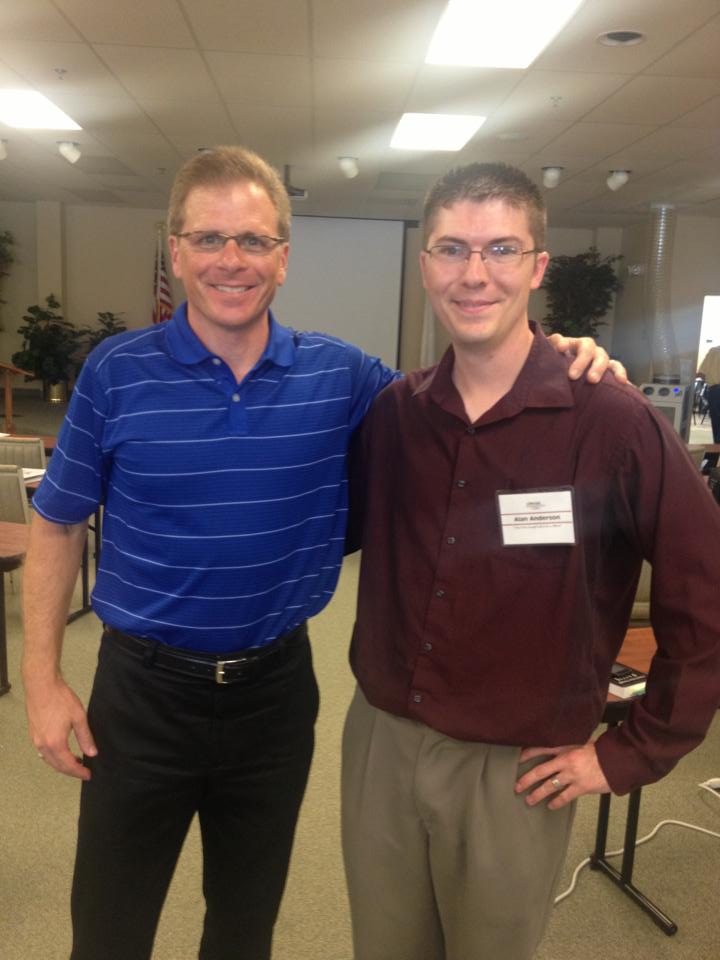
    I had the genuine pleasure of meeting Frank Turek at his three day Cross Examined Instructor Academy (CIA) class at Southern Evangelical Seminary in 2013. In the months that led up to CIA, I carefully read I Don’t Have Enough Faith to be an Atheist by Frank Turek and Norman Giesler, which I absolutely loved. Frank (along with Norm obviously) has a way of distilling complicated topics to a lay level for easier comprehension and readability. His delivery is witty and entertaining and allows for his audience to grasp the message in a practical way that promotes a competent understanding of the material. Needless to say, I consider Frank to be a mentor from afar in my apologetic studies. He has guided me via his books and his Cross Examined organization.

    Dr. Frank Turek

    While his other books, Legislating Morality, Correct, Not Politically Correct, and I Don’t Have Enough Faith to be an Atheist, are tremendously valuable for every Christian apologist, I found Stealing from God: Why Atheists Need God to Make Their Case to be the most potent and direct refutation of the atheistic worldview he’s written thus far. If anyone has listened to Turek or read any of his books, you’ll find that he has a creative way of looking at things. He gives a great illustration in the book (page xxix of introduction) about how we do not necessarily need to be an expert in every field of study in order to acknowledge when there is a problem with a particular worldview. He creatively makes an effective comparison between a Christian apologist and a house inspector,

    When we built an addition to our house, I was amazed how many specialists were needed. After the foundation guy, a series of specialty contractors came in. I can’t remember the exact order, but we had the framing guy, the roof guy, the brick guy, the siding guy, the window guy, the electrical guy, the plumbing guy, the insulation guy, the heating/AC guy, the drywall guy, the trim guy, the floor guy, the tile guy, the light guy, the fireplace guy, the paint guy, and an inspector.

    The inspector didn’t need to understand the detailed workmanship of each of those specialists in order to spot a fatal flaw in the foundation. In fact, if there were a fatal flaw in the foundation, it wouldn’t matter how good the workmanship was above it – the entire structure would soon collapse

    Frank is a tremendous inspector and this book outlines his inspection of the atheistic worldview. There are categories of reality that Frank inspected which led him to the conclusion that atheism falls embarrassingly short of accurately accounting for reality. He used the acronym, C.R.I.M.E.S., to present his inspection of atheism. I’ve provided the breakdown of the acronym below along with Frank’s chapter description for each letter,

    C – Causality – “To doubt the law of causality is to doubt virtually everything we know about reality, including our ability to reason and do science. All arguments, all thinking, all science, and all aspects of life depend on the law of causality

    R – Reason – “The main point of this chapter is to not show that all arguments for atheism fail. The main point of this chapter is to show that all arguments for anything fail if atheism is true

    I – Information & Intentionality – “God’s signature is not just in the cell, it’s in all of creation. God is as necessary to the universe as a band is to music. Once the band stops playing, the music is over

    M – Morality – “You can know what a book says while denying there’s an author. But there would be no book to know unless there was an author. Likewise, atheists can know objective morality while denying God exists, but there would be no objective morality unless God exists

    E – Evil – “Good reason provides all the information we need to see that the very existence of evil is a contradiction for atheism. If evil is real, then atheism is false

    S – Science – “To say that a scientist can disprove the existence of God is like saying a mechanic can disprove the existence of Henry Ford. While there is certainly evidence from science to support theism, the most important point for this chapter is not that science supports theism but that theism supports science. In other words, theism makes doing science possible. We wouldn’t be able to do science reliably if atheism were true

    Frank dives deep into each of these topics that atheists futilely use against God’s existence. Ultimately, if objections to theism necessarily require that theism be true for those objections to make sense, atheism might want to forego its critique on theism. Frank supports the claim that atheists are ‘stealing from God’ when they make assumptions about the world that can only make sense in a world where God exists.

    Conclusion

    I would highly recommend everyone (believer and unbeliever alike) read this book. Frank is able to keep complicated topics simple and provides helpful examples throughout the book to illustrate his points. He doesn’t allow his intellect to obstruct his ability to prioritize the importance of clearly delivering the message of the book. Being widely read in the area of Christian apologetics myself, I’ve never read a book solely dedicated to this topic. While I’ve read many books that refer to the harsh realities of atheism, I’ve never heard of (before now) an entire book dedicated to this topic. It’s a brilliant idea! Being familiar with Frank’s work for years, I’m not surprised that he wrote a book on the topic because he’s always referring to C.R.I.M.E.S. in the way he addresses these topics when he speaks and writes. For me, this is the most practical Christian apologetics book since J Warner Wallace’s Cold Case Christianity.

    A word to unbelievers, this is a book you must read. It will rightfully challenge your worldview and hopefully push you to reconsider your atheistic presuppositions. This is a challenge that must be faced with honesty and a genuine desire to embrace the truth. Frank outlines the logical consequences one must accept in order to be a loyal subscriber to atheism. These philosophical conclusions should prompt to you reexamine your belief that a God does not exist. I would encourage you to read the book with an attitude that allows you to freely follow the evidence wherever it leads rather than reading the book with a presupposition that the existence of God isn’t possible. Judge the book on its merits and you’ll gather a ton of valuable insights from it, and possibly a new worldview.

    A word to Christians, this book is a tremendous resource for you. It reveals the deficiencies of the atheistic worldview and presents a solid case for the Christian worldview (for the complete Christian apologetic, read I Don’t Have Enough Faith to be an Atheist). I strongly encourage you to become fluent in C.R.I.M.E.S. because it will help you become a better Christian apologist who is capable of having an informed discussion with unbelievers.

    This is a book that will generate discussion among believers and unbelievers alike. Frank is definitely capable of supporting his claims presented in this book in a public forum and I definitely look forward to potential debates in the future. It is people like Frank that do the intellectual hard-work for the church, and help One Dollar Apologists like myself deepen their understanding. Christian apologetics is vitally important for the expansion of the church in today’s secular society. These types of books are tools that help defuse the potency of atheistic claims against Christian theism. Equipped with the knowledge of this book, we’re better prepared to explain why atheism is false and easily point out the false assumptions atheism makes to articulate its case. This book is a wonderful apologetics book that is uniquely capable of delivering a message about the inadequacy of atheism.

  • How Reasonable was the Reason Rally?

    How Reasonable was the Reason Rally?

    While I was not present at the 2012 Reason Rally, I heard many interesting stories about the rally, particularly about the main event. The headliner of the event was Mr. New Atheist himself, Dr. Richard Dawkins (author of The God Delusion). While there were many activities during the rally, many people remember the rally based on the speech (video above) delivered by Dawkins. As far as I can tell, Dawkins’ speech was the most memorable during the rally and embodied the soul of what the event was truly about. It makes sense. He’s the icon of modern atheism. Dawkins assures atheists that they can confidently be the ‘brights’ among a see of intellectual depravity.

    My concern about the Reason Rally is simple; is it compatible with reason? Many in the unbelieving community wave the flag of reason and allege to pray at the altar of science but is it reasonable to believe that atheism is sitting on a firm foundation that can withstand the weight of such claims. As Frank Turek brilliantly describes in his new book Stealing from God: Why Atheists Need God to Make their Case, that atheists cannot make their case for atheism without stealing qualities about reality that wouldn’t have existed without God. Essentially, they need God to fight against Him. With this premise in mind, how can atheists promote a rally that alleges to celebrate the reasonability of atheism when reason wouldn’t have existed in a universe without the existence of a God?

    It’s clear that the atheists fail to understand the philosophical implications of their worldview. They’ve developed their own Ten Commandments for the 21st Century without acknowledging that the very commandments that they’ve development are without ontological foundation (review article here). Atheists belligerently complain about the mean ol’ Old Testament God without realizing that all moral actions of any kind are completely subjective and physically determined (review article here). Is the same thing going on with the Reason Rally? Are they claiming that they’re advocates of reason when they’ve misinterpreted the implications of their own worldview in an attempt to smuggle in reason? Given their philosophical track record, it seems that the only thing they’re consistent at is being inconsistent.

    Is Reason Compatible with Atheism?

    Since Dawkins was the main event, it is curious to see how Dawkins defined reason, “Reason means basing your life on evidence and on logic, which is how you deduce the consequences of evidence.” I wholeheartedly agree with his definition. However, does this definition align with all of the implications that atheism brings to the table? There are a couple of really good questions that one must ask if this question is going to be answered properly…

    Does atheism allow for freewill? The answer is no. How can one be reasonable if he or she cannot choose to be reasonable? According to philosophical materialism, which is the dominant philosophical position of most atheists, everything that exists must have a material cause. Nothing is immaterial. This means that philosophical materialism necessarily entails that everything in the universe is determined by a prior material cause that stems all the way back to the first moment of time. All the molecules in our bodies are merely reacting to previous causes without any the interruption of freewill (freewill assumes a mind and a mind is immaterial). Now, if philosophical materialism is true, would we have the ability to be reasonable? The Reason Rally presupposes that we have the ability to freely choose to be reasonable. With that in mind, Dawkins wrote in River Out of Eden: A Darwinian View of Life,

    “In a universe of blind physical forces and genetic replication, some people are going to get hurt, other people are going to get lucky, and you won’t find any rhyme or reason in it, nor any justice. The universe we observe has precisely the properties we should expect if there is, at bottom, no design, no purpose, no evil and no good, nothing but blind, pitiless indifference. . . . DNA neither knows nor cares. DNA just is. And we dance to its music” (p. 133)

    Dawkins’ quote states that we are determined by DNA as we “dance to its music.” I’m not surprised that Dawkins didn’t feel comfortable to share this fact with his audience of adoring fans. If he had, his inspiring go-gettem’ speech wouldn’t have had the same affect. I probably would have ignored that part too. Imagine going to a Reason Rally only to find out that you have no ability to reason if atheism were true. The ability to reason would only be possible if we had the free ability to think and make choices. Given the fact that we don’t question every thought (which would also be impossible under atheism) as being determined by the molecules in our brains reacting together to produce a physical effect, this reality should serve as a helpful commonsense hint that maybe philosophical naturalism is false.

    How would we know what reason is under atheism? It’s impossible. For the reasons listed above, everyone would be physically determined by the laws of physics from the very beginning of time. Similar to a long line of dominos, our actions are merely the product of the previous domino. That is why it is a problem with naming an atheistic gathering a ‘Reason Rally’! Atheism lacks all of the philosophical resources that are necessary for freely recognizing reason. The nature of philosophical materialism is the biggest roadblock for the atheist who wants to affirm objective morality, reason, freewill, or logic. Those atheists that valiantly affirm these qualities about life are living contradictory to the worldview they espouse.

    Reason is immaterial, so why start a Reason Rally advocating materialism? Based on Dawkins’ definition of reason above, the foundation for reason is ‘logic’ and ‘evidence’. Not surprisingly, Dawkins and the atheistic clan of brights are living inconsistently here too. The laws of logic are immaterial! For a philosophical materialist, it’s awfully curious to deduce from ‘logic’ and ‘evidence’ that philosophical materialism is correct by using the immaterial laws of logic. Why would a materialist use an immaterial process to prove immateriality does not exist? These are pitfalls of the philosophical materialist because the reason and logic they celebrate can’t be justified under their worldview. As Frank Turek says, atheists are “stealing from God to make their case!

    Is it Reasonable to Ridicule?

    Much of what came from the Reason Rally was intolerant towards the religious community despite what the Reason Rally declared on their website in their ‘About’ section,

    “Are we just going to use this opportunity to trash religion?
    No. This will be a positive experience, focusing on all non-theists have achieved in the past several years (and beyond) and motivating those in attendance to become more active. While speakers have the right to say what they wish, the event is indeed a celebration of secular values

    The question itself underhandedly implies that they will trash religion, but they clarified this by saying they were not gathering just to trash religion – there would be other stuff too. With that disclaimer being disingenuously outlined on their website, Dawkins made the following statement which became one of the highlights of his speech,

    So when I meet somebody who claims to be religious, my first impulse is: “I don’t believe you. I don’t believe you until you tell me do you really believe — for example, if they say they are Catholic — do you really believe that when a priest blesses a wafer it turns into the body of Christ? Are you seriously telling me you believe that? Are you seriously saying that wine turns into blood?” Mock them! Ridicule them! In public! Don’t fall for the convention that we’re all too polite to talk about religion. Religion is not off the table. Religion is not off limits. Religion makes specific claims about the universe which need to be substantiated and need to be challenged and, if necessary, need to be ridiculed with contempt.”

    This is a peek into the heart of a bitter atheist. Thankfully, most atheists are not like this. Dawkins is a angry old man with a vendetta against religion, particularly Christianity. He is definitely in need of prayer from the Christian community because it’s genuinely sad to see someone so angry and bitter. He’s blinded by this anger. He doesn’t see that he accuses the religious community of intolerance while being an icon of intolerance himself. He is the equivalent of a ‘fundamentalist’ in the atheistic community. Regardless of how philosophically inconsistent the atheistic community lives, I seriously doubt they would want to be represented by a man who is embodies an aggressively militant attitude towards the religious community as a whole. If reason were actually possible under atheism, it’s not reasonable to make the statements Dawkins made at the Reason Rally.

    Conclusion

    Life is meaningless if the atheistic worldview is true. Does that mean atheism is false? Absolutely not, however what can be persuasively shown is that a strong cumulative case for Christian theism does exist. In light of the evidence as a whole, it truly does take more faith to be an atheist than it takes to be a Christian. When those at a Reason Rally say that it’s more reasonable to be a member of the unbelieving community, it’s important to acknowledge the fragile foundation from which they’re making such a claim to intellectual superiority.

    I’d be interested to know how many individuals who attended the Reason Rally acknowledge these philosophical implications as realities associated with their worldview. Oddly enough, even if they did acknowledge any of these philosophical realities, they would have been determined by their genes to acknowledge them without any free choice of their own. I seriously doubt that anyone at the Reason Rally would have freely admitted this fact if they were being honest with themselves. We were designed with the ability to freely choose to make choices of our own and be morally accountable to God for all of our actions. Saying that we’re meat machines merely responding to physical stimuli doesn’t pave a pathway to intellectual advancement. The world only makes sense if we see ourselves as unique individuals with the ability to freely contribute to society while being accountable for our own moral actions. We’ve been made in the image of God and this is the only framework that makes sense of our experience of reason, logic, morality, science, and free choice.

    One may choose to ignore these facts and willfully deny the implications of their chosen worldview, but avoiding these realities does not allow for genuine and honest advancement. Our image as humans reflects the image of God and that’s why we can make sense of the world around us. We can admire a beautiful sunset because we have the ability to recognize the reality of beauty. We can recognize justice when a convicted criminal is sent to prison for brutally murdering an innocent family. We can deduce from ‘logic’ and ‘evidence’ that we are not meaningless through the special and general revelation of God. These are the realities that can be easily acknowledged without strain by the genuine seeker of truth. I’m convinced that is why atheists are so desperate to borrow these realities that Christians freely accept, even if it means that it going against the grain of their own worldview. Their worldview requires the acceptance of many facts that are much too burdensome to bear. As Christians, it’s important that we point out these facts and ask them that if they are incapable of living the life of an honest atheist, why not live a worldview that makes sense of all of the facts? Jesus Christ provides a worldview that easily provides all of the resources to make sense of reality and gives us the freedom to live a life connected to the One who created it all. Instead of running from the Creator, embrace Him. Christ is our reason to rally!

  • Examining the 10 Commandments of Atheism

    Examining the 10 Commandments of Atheism

    The Atheist Mind Humanist Heart website recently conducted a crowd sourcing project titled, “The ReThink Project”, where they asked their viewers to submit entries with the goal of developing theTen Commandments for the 21st century”. They had a slew of popular atheist names on the judge’s panel to narrow all the entries down to ten, which included well-known atheistic advocates such as Adam Savage from Mythbusters, Dan Barker from the Freedom from Religion Foundation, and Matt Dillahunty from the Atheist Experience television show. There was a reasonable amount of responses from their fan base with over 2,800 entries submitted from over 18 countries. However I must admit, when I heard of the “ReThink Project”, I almost laughed aloud.

    The first question that ran through my head was,how are they going to ground any moral values and duties to an objective standard without a God?Without an objective moral standard by which to differentiate morally good actions and morally evil actions, will any of their revised Ten Commandments make any sense? Below, I have listed their version of the Ten Commandments along with an explanation of why they believe it should be on the list. After the listed commandment and its explanation, I’ll outline my thoughts on whether their revised commandment truly aligns with an atheistic worldview. From an ontological perspective, moral laws (i.e. commandments) cannot be objectively grounded without the existence of a moral law giver (i.e. God) who would be the source by which all moral activity can be objectivity measured. Now that I’ve established the basis for my critique, I’ll jump into my assessment of each of their newly development atheistic commandments.

    1. “Be open minded and be willing to alter your beliefs with new evidence”

    Why: “It is essential in order for us to be able to collaboratively work together to find common solutions to pressing world problems

    Despite the fact that the New Atheistic movement has been synonymous with a gross display of closed-mindedness, it’s important to ask, what moral obligation does anyone have to be open minded about anything under atheism? Why do “common solutions to pressing world problems” really matter? Obviously, as humans, we naturally feel like this statement is altruistic and morally admirable. It’s only natural to feel like we have a moral obligation to band together as the dominant human species and tackle sex-trafficking, ISIS, world pollution, and corrupt politicians. But the main question remains, why? Why, from an atheistic worldview, is there any reason to believe this sense of obligation is objective? Without a God, the individual atheist must answer this question if he or she is going to going to make it a commandment (i.e. moral obligation) for others to abide by.

    1. “Strive to understand what is most likely to be true, not to believe what you want to be true”

    Why: “We’re more likely to believe what we wish to be true over what we wish not to be true, regardless of veracity. If we’re interested in learning the truth, then we need to actively separate our beliefs from our desires

    This is just as applicable to atheists as it is to theists. I’ve known both atheists and theists who believe what they do simply on the basis of wanting their worldviews to be true rather than believing what they do because their beliefs are evidentially aligned with reality. In fact, I feel too many people are like this. Not surprisingly, their rationale seems to be loaded with atheistic presuppositions. The rationale for this commandment seems to be underhandedly directed at theists who aren’t interested in seeking truth because they are incapable of separating beliefs from reality. While I agree that we should all strive to seek the truth, and those who honestly do so will undoubtedly find it, but what moral obligation is there to act in this way if God does not exist? Why is the quality of studiousness an admirable quality in an atheistic worldview versus the quality of laziness? This commandment to seek ‘what is most likely to be true’ cannot be judged as moral without an objective standard by which to measure it.

    1. “The scientific method is the most reliable way of understanding the natural world”

    Why: “Every time humans have questions this method is used to solve them. If we don’t know, we don’t know but instead of making up the answer we use this method to reach a conclusion/answer

    The scientific method is an excellent method of understanding the natural world. The scientific method gathers volumes of information that we can further study and use to come up with philosophical conclusions, which will grant us the ability to see theistic implications. In their explanation of the commandment, they pat themselves on the back for using the scientific method instead of “making up the answer”. When it comes to moral truths, are they devising their “10 Commandments for the 21st Century” by using the scientific method or are they just “making up the answer”? It seems that they wouldn’t have devised their version of the Ten Commandments while simultaneously believing their moral conclusions were false. I’d like to ask them how the scientific method assisted them in the construction of these new commandments.

    1. “Every person has the right to control their body”

    Why: “This includes a person\”s right to not be murdered, raped, imprisoned without just cause (violating another person\’s rights), kidnapped, attacked, tortured, etc. This also protects a person\’s freedom of speech and freedom to dress and represent themselves as they so choose

    There are some interesting insights that can be made about this commandment. If they are going to live consistently with their 4th commandment, do you think they would be pro-life? As they said in their explanation, “This includes a person\”s right to not be murdered”. Given that an abortion would meet the definition of murder as the unborn baby is a person, their 4th commandment requires the atheist to be pro-life if they are going to live according to their own commandments they constructed. Given that many nonbelievers are traditionally pro-choice, it would be interesting to see how they would reconcile this contradiction between the commandment that they approved and their traditionally held position on the abortion issue.

    Atheists have been some of the fiercest aggressors against the Christian worldview in Western society. The words bigot, intolerant, hateful, narrow-minded, and homophobe haven’t been so grossly misused in the history of the English language to describe the Christian community simply because Christians haven’t embraced particular behaviors (particularly homosexuality) among society. While society is progressively embracing this behavior as a whole, the Christians who oppose homosexuality are being publically demonized for holding true to their beliefs. When atheists disagree with our standing in opposition of homosexuality, same-sex marriage, abortion, etc…, will this 4th commandment keep them from being toxic during dialogues?

    I repeat again, if the atheistic worldview is true, what rights do we have if God does not exist? Rights would be illusory and if anyone said they had a right to something, it would be their own personal construct rather than an objective reality established by God that all people can see and acknowledge.

    1. “God is not necessary to be a good person or to live a full and meaningful life”

    Why: “When one does a good deed it isn’t because God tells one to do a good deed, but because one simply wants to be good person. As Human beings we are capable of defining our own, different, meanings for our lives, with or without a god

    It’s true; atheists can be morally great people. In fact, I’ve known atheists that are far more moral than any religious person! We must ask however, do you need to have a personal relationship with God to be a morally good person? No, but God has placed the moral law on our hearts which is how we all acknowledge that there is an objective moral code by which to measure all moral actions. The explanation says, “When one does a good deed it isn’t because God tells one to do a good deed, but because one simply wants to be good person”. How are they defining ‘good’ without an objective standard? Is it the subjective standard that they’ve constructed on their own? Or possibly, is it the objective ‘good’ that we all know exists because the objective standard is written on our hearts? Without God, the term ‘good’ is meaningless in a moral sense.

    1. “Be mindful of the consequences of all of your actions and recognize that you must take responsibility for them”

    Why: “It may sound obvious, but negligence and refusal to take responsibility are an immense source of harm in the world, from interpersonal relations to Global issues

    How would consequences have any moral implications under an atheistic worldview? Let alone moral obligations! What reasons do we have to believe that atheism is the proper moral framework to take the 6th commandment seriously?

    1. “Treat others as you would want them to treat you and can reasonably expect them to want to be treated. Think about their perspective”

    Why: “If everyone did their best to carry this out as far as it can go, everyone would get along much better

    Ah yes, the Golden Rule! It’s a good one. But again, the same question continues to arise, what reason do we have to believe that atheism demands such a moral obligation? Without an objective moral framework, how can a commandment authoritatively issue such an obligation?

    1. “We have the responsibility to include future generations”

    Why: “As human beings, we have great power. As Voltaire noted “With great power comes great responsibility.” To not consider others would be selfish and petty. We have demonstrated the ability to be magnanimous, are rapidly becoming more so, and will be even more so in the near future

    What moral obligations do we have to future generations if atheism is correct? Their explanation highlights that it is morally detestable to be “selfish and petty”, but what basis does the atheist have to make such a moral judgment? When there is no objective standard, one cannot contrast morally good qualities from morally bad ones.

    1. “There is no one right way to live”

    Why: “If you look, even a little, you find many cultures living in moral societies that are fundamentally different, with only a few very basic principles being adhered to between them. Just because one group is different, does not mean they are wrong

    What is the purpose of these Ten Commandments if they are not telling me how to live? Doesn’t commandment nine invalidate the entire purpose of developing these Ten Commandments? Why would you write commandment nine if by writing commandment nine you invalidate the entire list that attempts to tell me how to live in the ‘right way’? It’s a huge inconsistency.

    1. “Leave the world a better place than you found it”

    Why: “The Japanese concept of Kaizen teaches that small incremental improvements can have a profound effect over time. We should all strive to leave the world better than we found it be it through relieving the suffering of others, creating works of art, or passing along knowledge

    Under an atheistic worldview (sounding repetitious), what moral obligation do I have to the world? The atheistic worldview does not necessarily require moral obligations. While most people feel like this is something all people should strive to do, but what real obligation is there to fulfill these feelings? These types of moral obligations are consistent with a theistic worldview, not an atheistic one.

    Conclusion

    With the moral framework of the atheistic worldview being grossly inadequate to make this commandment list philosophically sound, does this list serve any objective purpose whatsoever outside of constructing a merely subjective list of what they personally would like to see? I would say not. Since all of these commandments are completely subjective, what moral obligation do we have to them? The sad irony is that if philosophical materialism (i.e. atheism) is true, as many on the judges panel contend that it is, determinism is a reality and nobody can really be held morally accountable for their own actions because they’re merely walking meat-machines (i.e. molecules-in-motion) that are simply responding, moment by moment, to each and every preceding physical event. How can someone who is committed to philosophical materialism claim that objective moral standards and obligations exist when we (i.e. humanity) are material that is naturally reacting to preceding material events? If philosophical materialism is true, all material existence and actions can be compared to dominos falling from the very beginning of the universe. All actions would be the direct result of the event before it; hence the present event would be completely determined by its preceding event. Does determinism allow for objective morality? Absolutely not. Why? Freewill would not possible because all actions would be determined by a prior material event.

    That’s what makes this list of 10 Commands for the 21st Century so ridiculous. Like Frank Turek brilliantly says, “Atheists have to sit in God’s lap to slap his face”. Atheists are borrowing the objective moral framework provided by God to clumsily combat His existence. Obviously, atheists want us to take their commandments seriously but they have no ontological foundation to objectively formulate their 10 Commandments. Since objective morality provided by God is the only morality than demands a moral obligation, , I suppose their list of commandments is a mere compilation of their molecules-in-motion that happened to have developed as a result of all of their preceding physical events, which makes these commandments not only subjective, but determined. In other words, all the commandments that were compiled were physically determined and cannot be considered as morally objective in any sense. To be imaginative, let’s pretend that the atheistic worldview magically allowed for freewill; that would still not allow for an ontological foundation for the grounding of objective morality, hence making their list of 21st century commandments completely subjective.

    At the end of the day, the atheistic worldview is morally unlivable. Not because atheists are somehow incapable of living good moral lives but because there is no difference between good or evil without the objective moral standard set forth by God. Many atheistic scholars have come to terms with this reality. Atheist Richard Dawkins wrote in River Out of Eden: A Darwinian View of Life,

    “In a universe of blind physical forces and genetic replication, some people are going to get hurt, other people are going to get lucky, and you won’t find any rhyme or reason in it, nor any justice. The universe we observe has precisely the properties we should expect if there is, at bottom, no design, no purpose, no evil and no good, nothing but blind, pitiless indifference. . . . DNA neither knows nor cares. DNA just is. And we dance to its music” (p. 133)

    Atheist William Provine, a scholar of the history of evolutionary biology at Cornell University, said in a debate with Philip Johnson,

    “Let me summarize my views on what modern evolutionary biology tells us loud and clear — and these are basically Darwin’s views. There are no gods, no purposes, and no goal-directed forces of any kind. There is no life after death. When I die, I am absolutely certain that I am going to be dead. That’s the end of me. There is no ultimate foundation for ethics, no ultimate meaning in life, and no free will for humans, either”

    Atheist philosopher Michael Ruse wrote in Evolutionary Theory and Christian Ethics,

    “The position of the modern evolutionist is that humans have an awareness of morality because such an awareness of biological worth. Morality is a biological adaptation no less than are hands and feet and teeth. Considered as a rationally justifiable set of claims about an objective something, ethics is illusory. I appreciate when someone says, ‘Love thy neighbor as thyself,’ they think they are referring above and beyond themselves. Nevertheless, such reference is truly without foundation. Morality is just an aid to survival and reproduction, . . . and any deeper meaning is illusory” (pp. 262-269)

    I can go on and on with atheist scholars supporting this position. Generally speaking, atheist academics have settled this fact. Morality is groundless without a moral law giver (i.e. God). Does that sound depressing? Absolutely, but it is the truth if God does not exist. My goal isn’t to put a damper on “The ReThink Project” but I may suggest that it strongly rethink its strategy. If it were to do that, their project may not be nearly as fun. Imagine if they were to advertise in a way that stayed loyal to their atheistic worldview! It might go a little something like this,

    “At Atheist Mind Humanist Heart, we’re developing a project that will update the 10 Commandments for the people of the 21st Century, and we need your help! While we recognize that all of your submissions to this project have been causally determined and your freewill is nothing more than a convenient illusion, we value what nature has ultimately forced you to write! Let your Darwinian roots take you as far as your freewill illusions will allow. Write like you have a mind of your own! Celebrate the notion of being open-minded and morally obligated to do certain things. Write as though it matters! Ascribe value to actions and behaviors when there is none to be had! Enjoy my fellow freethinkers, as though you were really free to think!”

    I pray that nobody took personal offense to my parody but I honestly feel it (as ridiculous as it was) was a more accurate representation of the atheistic worldview than the one presented in the “ReThink Project”. I honestly don’t blame the atheists who desire a system of morality that affirms absolute moral standards. Life would be truly unlivable without them. For example, if someone robbed your home and harmed your family, you could not objectively say that this person did anything wrong! Maybe this man thinks that robbing and harming is morally acceptable. Also, you couldn’t hold him morally accountable because he is merely behaving in accordance with his molecules that are physically reacting from one moment to the next. Are you beginning to see how this is unlivable?

    It’s admirable to be an atheist and affirm the existence of objective morals but it stands in the face of atheism itself. It is an inconsistent position to hold if one wishes to be a loyal atheist. Loyal atheism would require one to deny the existence of all morality. They couldn’t affirm that there was a moral difference between Hitler and Jesus because there is no objective moral standard by which to compare the two. In the end, it’s a hard subject to handle for the atheist because it’s evident that everyone wants to affirm certain moral truths to be absolute. It’s undeniable that God has truly written the moral law on our hearts.